
Understanding Car Body Repair in the UAE
Car body repair covers every service that restores the exterior structure, panels, and paintwork of a vehicle after cosmetic wear, minor impacts, or a full collision. It sits alongside mechanical work like engine repair and car maintenance as one of the two pillars of complete vehicle care — one keeps the car running, the other keeps it looking and structurally sound. In the UAE, where intense heat, fine desert sand, and dense city parking combine, body damage is one of the most common reasons drivers visit a workshop.
Denting: From Paintless Repair to Panel Beating
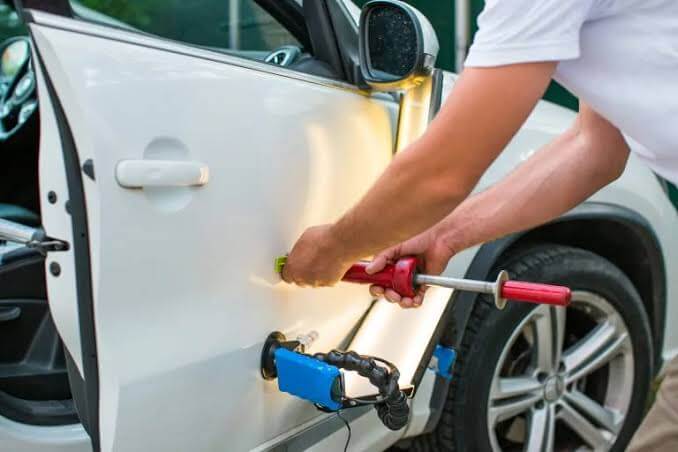
Denting refers to any inward deformation of a metal or composite panel. The right repair method depends entirely on the dent's depth, location, and whether the paint surface has cracked. Shallow dents on accessible panels, such as a door ding from a neighbouring car door, are ideal candidates for paintless dent repair (PDR). A trained technician accesses the back of the panel and gradually massages the metal back to its original contour using specialised rods and glue-pulling tools, all without disturbing the factory paint layer.
Deeper dents, sharp creases, or damage where the paint has cracked or chipped require traditional panel beating. This involves hammering, shaping, and sometimes filling the panel before it is primed, sanded, and repainted. Collision-related dents that affect the vehicle's structural rails often need a frame-measuring jig to confirm the chassis is realigned to factory specification before any cosmetic work begins.
Good to know: PDR is faster, cheaper, and preserves your car's original factory paint — which matters at resale, since an unrepainted panel signals "never in an accident" to a buyer or valuation inspector.
Car Painting: Colour Matching, Spray Booths & Clear Coats
Once a panel is repaired, matching the new paint to the surrounding factory finish is where most local garages fall short. OBD Auto Repair uses a computerized spectrophotometer to read your vehicle's exact factory paint code, including metallic flake density and pearl coat layers, then blends the formula in-house before spraying it in a filtered, dust-free booth. The panel is then cured, either air-dried or oven-baked depending on the paint system, and finished with a UV-resistant clear coat.
Painting quality depends on four variables: surface preparation, colour accuracy, booth cleanliness, and curing method. Skipping any one of these results in visible overspray edges, orange-peel texture, or a colour that looks right in the showroom but mismatches under UAE sunlight. That is why every paint job at OBD passes a natural-light inspection before the vehicle is released.
Bumper Repair vs. Bumper Replacement
Modern bumpers are made of reinforced thermoplastic, designed to absorb minor impacts without transferring force to the chassis. Cracks, scuffs, and popped clips can usually be repaired through plastic welding and reinforcement rather than full replacement, saving cost while restoring both appearance and structural integrity. Bumpers housing parking sensors or camera brackets are inspected and, where necessary, recalibrated after repair to keep safety systems functioning correctly — a step that pairs naturally with a broader electrical repair check if sensor faults are suspected.
Why UAE Weather Accelerates Body Damage
Gulf conditions are harsher on car exteriors than most climates worldwide. Ambient temperatures above 45°C in summer soften plastic trims and accelerate clear-coat oxidation, while constant UV exposure fades pigment and causes chalky, dull paint over time. Fine desert sand carried on strong winds acts like a natural abrasive, creating micro-scratches across the clear coat every time a vehicle is driven or improperly wiped down. Coastal humidity in Abu Dhabi adds a third factor: accelerated corrosion around wheel arches, door sills, and the underbody, particularly on vehicles regularly exposed to sea air.
These conditions mean UAE vehicles typically need clear-coat protection, rust prevention treatment, and colour-correction polishing more frequently than cars in temperate regions. Combining a body repair visit with a routine car maintenance check helps catch early paint and corrosion issues before they spread.
Insurance Claims & Collision Repair
After a collision, most UAE insurance policies require an approved workshop assessment before repair work begins. OBD Auto Repair documents all damage with a digital photo report and itemized estimate, then coordinates directly with major UAE insurers to streamline approval and, where applicable, arrange direct billing. This keeps the claims process transparent and removes the burden of paperwork from the vehicle owner.
For non-insurance repairs, every quote is provided upfront in writing before any work starts, so there are no surprise costs once your vehicle is on the lift.
How Body Repair Connects to the Rest of Your Vehicle
A dented bumper or fender is rarely just cosmetic. Impacts strong enough to deform a panel can also misalign the wheels, damage sensors, or crack cooling components. That's why our body repair inspections are often paired with a check across other systems, including suspension repair, brake repair, and car AC repair if the condenser sits behind an impacted bumper. If your check engine light appears after an impact, a engine repair diagnostic scan is worth booking alongside your body repair visit.
Choosing the Right Paint Finish
Not every panel repair calls for the same paint system. Solid colours are the simplest to match and the most forgiving on edge blending. Metallic finishes contain fine aluminium flakes that must be sprayed at a consistent angle and thickness to avoid a patchy, blotchy look under sunlight. Pearl and tri-coat finishes add a translucent pearlescent layer over the base colour and are the most technically demanding to match, requiring an experienced painter and a properly calibrated spectrophotometer reading. Matte and satin finishes, increasingly common on SUVs and performance trims, need a dedicated matte clear coat since a standard gloss clear coat will leave a visible sheen mismatch. Telling your OBD advisor which finish your vehicle has, or simply letting our team scan the factory paint code, ensures the repaired panel is sprayed with the correct system the first time.
Genuine Parts vs. Aftermarket Body Panels
When a panel is damaged beyond repair, such as a fender torn in a collision, replacement parts fall into two categories. Genuine OEM panels are sourced directly from the manufacturer or an authorized distributor and guarantee an exact fit, correct metal gauge, and factory-matched mounting points. Certified aftermarket panels from established manufacturers offer a lower-cost alternative with comparable fit and finish, backed by their own warranty. OBD Auto Repair discusses both options transparently during the quotation stage, so you can weigh cost against long-term resale value before approving the repair.
DIY Touch-Up vs. Professional Body Repair
Small touch-up pens and rubbing compounds sold at auto parts stores can mask very light surface scratches that have not penetrated the clear coat, but they rarely achieve a durable, colour-accurate result on anything deeper. Attempting to fill or sand a dent without proper tools often stretches the metal further, turning a simple PDR job into a more expensive panel-beating repair. For anything beyond a hairline surface mark, a professional inspection is the safer route, particularly since OBD Auto Repair's initial visual assessment is free and carries no obligation to proceed.
Choosing Between an Independent Workshop and a Dealership
UAE consumer protection regulations allow vehicles to be serviced at independent, certified workshops without voiding the manufacturer warranty, as long as genuine or OEM-equivalent parts and proper repair standards are used. OBD Auto Repair follows factory repair procedures, uses dealer-grade diagnostic and colour-matching tools, and backs every repair with a workshop warranty, delivering agency-level quality at a more transparent cost.